
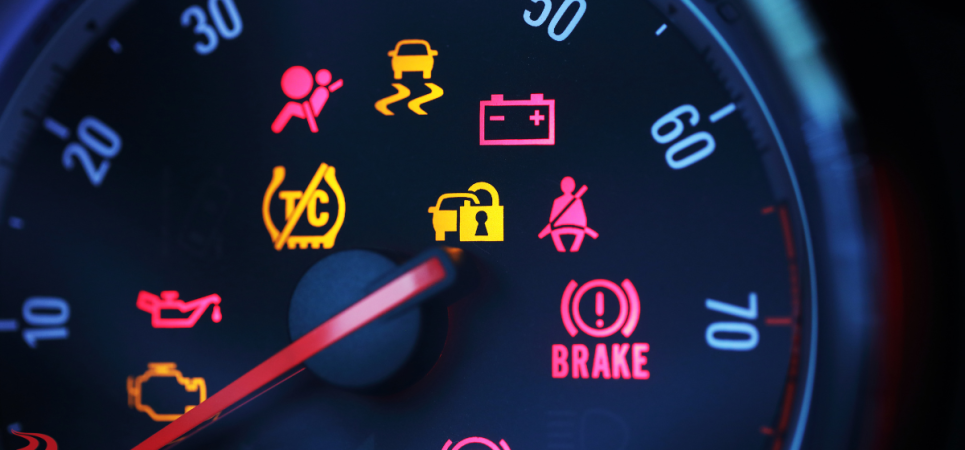
Dashboard warning lights are your car’s built-in early warning system — but most drivers aren’t sure what they actually mean. Some lights are simple reminders. Others require urgent attention to prevent breakdowns or serious engine damage.
Here in Queanbeyan and Canberra, we regularly help drivers who ignore warning lights for days or weeks, only to discover a problem that’s now far more expensive to repair. The good news is that many issues can be solved quickly if diagnosed early.
Below are five of the most common dashboard warning lights, what they mean, and what you should do next.
1. Check Engine Light (CEL)
What it looks like:
A small engine icon, yellow or orange.
What it means:
This light relates to the engine or emissions system. It can be triggered by something minor, or something serious.
Common causes include:
- Faulty oxygen (O2) sensors
- Loose fuel cap
- Misfires
- EGR/DPF issues (diesels)
- Fuel delivery faults
- Air-intake leaks
- Catalytic converter problems
Is it safe to keep driving?
Maybe — but don’t ignore it.
If the light is solid, the vehicle is alerting you to a problem that needs checking soon.
If the light is flashing, STOP driving — this usually indicates a misfire that can damage the engine or catalytic converter.
Local note:
Many diesel vehicles in Queanbeyan/Canberra trigger check-engine lights due to DPF faults caused by short trips and stop-start driving.
2. Battery / Charging System Light
What it looks like:
A battery symbol.
What it means:
This light warns of a fault in the charging system, not necessarily the battery itself.
Possible causes:
- Failing alternator
- Loose belt
- Corroded battery terminals
- Damaged wiring
- Low battery voltage
Is it safe to keep driving?
Only for a short distance.
Once the battery stops charging, your car will:
- Lose power steering
- Drop electrical systems
- Stall without restart
Get it diagnosed quickly to avoid being stranded.
3. Oil Pressure Light
What it looks like:
Oil can symbol (often red).
What it means:
Low oil pressure, not low oil level.
This is one of the most serious lights your car can show.
Common reasons:
- Low oil
- Failing oil pump
- Blocked oil pickup
- Internal engine wear
- Oil leaks
Is it safe to keep driving?
Absolutely not.
Driving with low oil pressure can destroy an engine within minutes.
Pull over immediately and turn the engine off.
4. Brake Warning Light
What it looks like:
A circle with an exclamation point or “BRAKE”.
What it means:
Multiple brake-related issues can trigger this, including:
- Low brake fluid
- Worn brake pads
- ABS faults
- Handbrake partially engaged
- Hydraulic leaks
Brake issues can escalate fast, especially on steep roads around Queanbeyan and Canberra.
Is it safe to keep driving?
Drive with caution and get it checked ASAP.
If the pedal feels soft or the light flashes — stop immediately.
5. Temperature / Overheating Light
What it looks like:
Thermometer symbol, waves under it.
What it means:
Your engine is overheating.
Causes include:
- Low coolant
- Radiator issues
- Failing thermostat
- Water pump failure
- Blocked radiator
- Cooling fan faults
Is it safe to keep driving?
No.
Overheating can cause head gasket failure — a very expensive repair.
Local note:
Our region’s steep climbs (e.g., toward Canberra or the coast) put extra heat stress on cooling systems.
Why Dashboard Lights Matter More on Local Roads
Queanbeyan and Canberra driving conditions increase the likelihood of dashboard warnings because of:
- Hot summers → overheating, AC load, cooling system pressure
- Cold mornings → battery strain
- Stop–start traffic → DPF and sensor faults
- Highways → misfires, balance issues, fuel delivery faults
- Hills & climbs → temperature spikes, brake load
A small warning light now can become a major fault if ignored.
What To Do If a Warning Light Comes On
1. Don’t panic — check the colour
- RED = STOP
- YELLOW/ORANGE = caution, needs attention soon
2. Take note of how the vehicle feels
Any of the following make the issue urgent:
- Loss of power
- Shaking
- Smoke or smell
- Rough running
- Overheating
- Hard steering
3. Book a diagnostic test
This is the quickest and most accurate way to find the issue.
4. Avoid guessing or clearing the code
Clearing the light doesn’t fix the cause — and can hide a serious fault.
5. Don’t wait for the next service
Warning lights appear for a reason. The longer you wait, the more damage can occur.
Internal link:
Read: What Is a Car Diagnostic Test? → /blog/what-is-a-car-diagnostic-test/
(Replace with final URL)
FAQs
Can I drive with a Check Engine Light on?
Only if it’s solid and the vehicle feels normal — but get it looked at soon.
If flashing → stop immediately.
Why does my light come on and off randomly?
Intermittent faults are common with sensors, wiring or temperature-based issues.
Will a diagnostic test fix the issue?
It identifies the cause. A repair/adjustment is usually needed afterwards.
Can I ignore a warning light if the car feels normal?
No — many serious faults don’t show obvious symptoms early.
How long does a diagnostic check take?
Usually 20–40 minutes, depending on the fault.
Final Thoughts
Dashboard lights shouldn’t be ignored — but they also shouldn’t cause panic. Most issues are quick to diagnose and straightforward to repair when caught early.
If a warning light has appeared on your dash, especially one related to engines, brakes or overheating, bring your car to our Queanbeyan workshop and we’ll pinpoint the issue with a professional diagnostic scan.